Kneecap VS. The U.K. Government
In a world where U.K. rap is on the rise, we listeners must not leave Northern Ireland in the dust, specifically Kneecap. Kneecap is an energetic and unapologetic rap trio from Belfast, Northern Ireland comprised of Mo Chara, Móglaí Bap, and DJ Próvaí. Together, they have been releasing music since 2017, but only in the past couple years have they exponentially blown up.
As cliché as it may sound, Kneecap are not your average rap trio. The group grew up in the aftermath of the Good Friday Agreement which put an end to the thirty year-long conflict (The Troubles) between Northern Ireland and the U.K. government. As a result, the trio’s music is rife with political themes: hope for a united Ireland, commentary on the working class, and enthusiasm to keep the Irish language in practice.
This latter aspect has made Kneecap stand out among other Irish artists––unlike some of their contemporaries, the group raps in a combination of Irish and English. For years, the U.K. prevented the use of Irish in schools and government, only recently officially recognizing it. As a result, the Irish language remains endangered to this day, and Kneecap has, in part, used their music to keep the language alive.
While Kneecap’s music is political, it is not overbearingly so––an aspect that seems key to their rise to fame. They incorporate their messages with digestibility in mind, intentionally tying political themes into elements of ordinary youth experiences in Ireland. Their first single, “C.E.A.R.T.A” (2018), translates to rights in English. While it contains heavy anti-police and anti-U.K. government themes, it poses these arguments within conversations of party life, thus appealing to a younger audience. Some people criticize the trio’s heavy thematic emphasis on substance use, but these critiques arguably miss the greater picture: the embedded desires for a united Ireland.
As a non-Irish speaker, I often have to dig to interpret their lyricism. However, this works in favor for Kneecap’s expanding audience. The language barrier forces listeners to engage on a deeper level with the lyrics. In searching for translations, listeners ultimately become more aware and well-read on the issues and events Kneecap raps about.
As mentioned prior, Kneecap only recently garnered worldwide popularity, particularly with the 2024 movie, Kneecap. The film is loosely based on the trio’s origins, with creative liberties taken to enhance themes of cultural identity and resistance to oppression as scenes of the artists battling with local law enforcement play out on screen.
Since the release of their movie, Kneecap has headlined festivals like Glastonbury and even broken through to their new American audience, performing at Coachella for both weekends. However, not everyone has appreciated the growing spotlight on their advocacy. Beyond intra-Britain issues such as support for the Irish language, Kneecap has been outspoken on global human rights issues. The trio has consistently shown their support for Palestine, displaying the flag and speaking about the genocide during their concerts. Additionally, their 2025 Coachella set broadcast was cutoff after starting a “Maggie’s in a box” chant––referring to the late Margaret Thatcher––as well as after displaying messages criticizing the US government’s support for Israel.
In 2024, the U.K. government gave Kneecap a grant as a means of support for British musicians. However, this grant was later revoked due to the group’s radical activism. The trio sued the government, and in November 2024, won said lawsuit, triumphantly receiving the grant money. Most recently this past October, Kneecap was forced to cancel their US tour dates due to overlapping court dates. One of the band members, Mo Chara, had been charged with a terror offense for wielding a flag associated with Hezbollah during one of the Kneecap concerts. The charges have since been dismissed on a technicality, and Mo Chara, as well as the other members of Kneecap, have since announced that they do not support Hezbollah or Hamas and the violence these groups enact. Kneecap and their fans view these lawsuits as an attempt to silence the group for their political activism, specifically for their support of Palestine.
One of Kneecap’s most recent drops, “The Recap,” channels their anger and frustration into a high energy, drum&bass single as an address of their absence throughout the lawsuits. Kneecap tells the world through this single that they are here to stay, that they will not let corrupt governments keep them from reaching their full potential.
Attempts to silence Kneecap have only further established them as a force to be reckoned with in the music world. The more their voices are silenced, the more people want to hear what the artists have to say. Kneecap made major breakthroughs for the Irish language and has become some of the music world’s most prominent voices of pro-Palestine and anti-colonization. For me, the most impactful result of their work has been the overwhelming encouragement of our generation to speak out and get involved––about Palestine, but also about politics in general. Once you hear the energy and anger they channel through music, you cannot help but want to join them.
Their resistance is contagious.
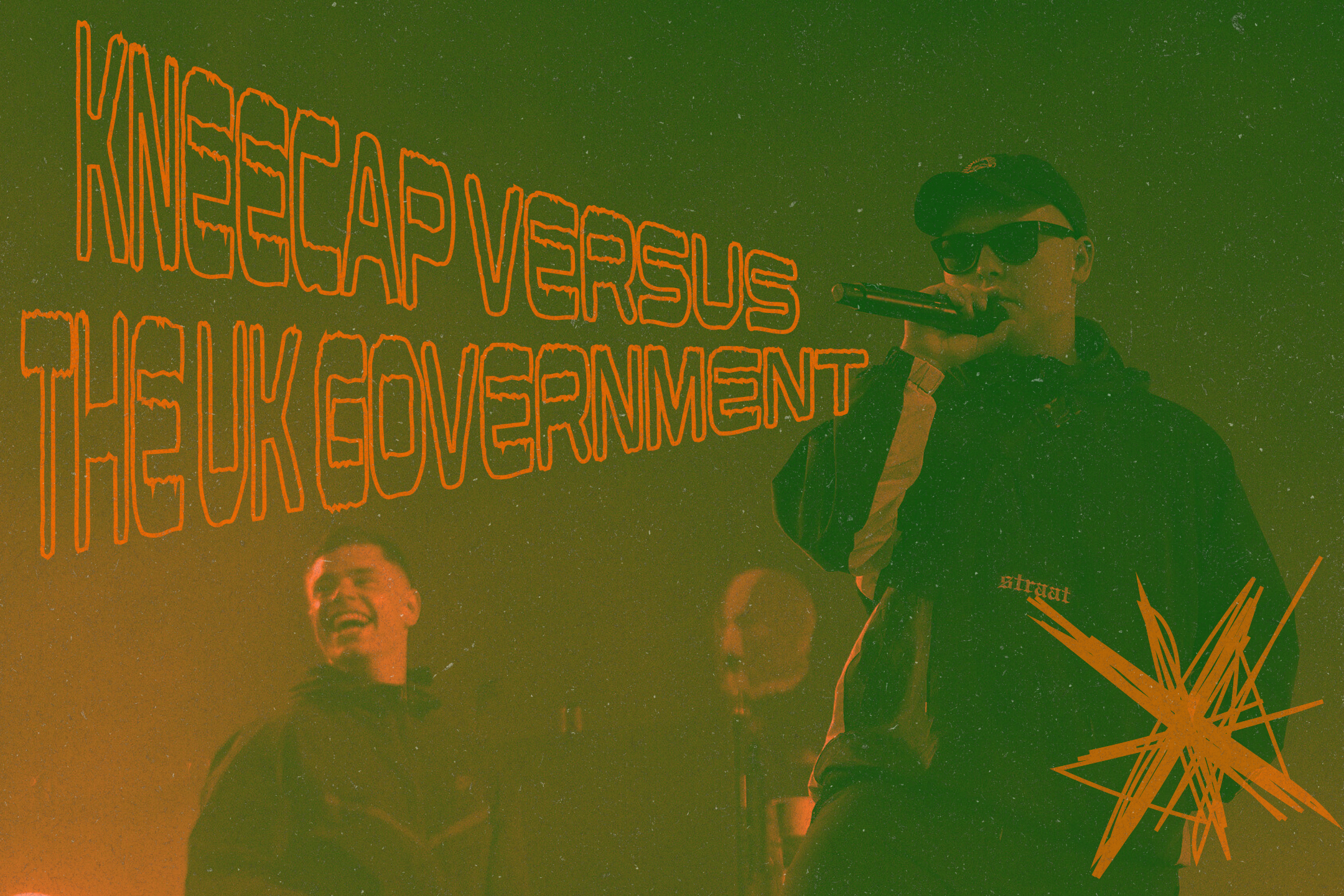
Cover image includes… KNEECAP photo credited to Raph_PH [via Wikimedia Commons]. This file is licensed under the Creative Commons Attribution 2.0 Generic license.
